
What happened to Australian Airlines after its 2002 relaunch?
Australian Airlines lasted less than four years. Qantas retired the brand in mid-2006, transferring most of its aircraft, crews and routes to either Qantas or the rapidly expanding Jetstar operation.
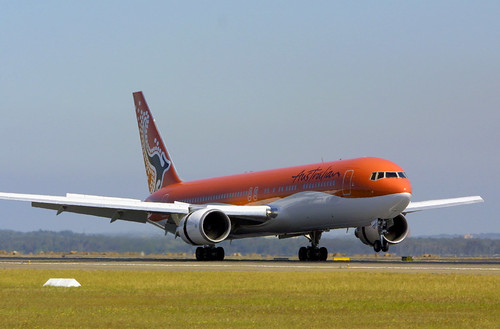
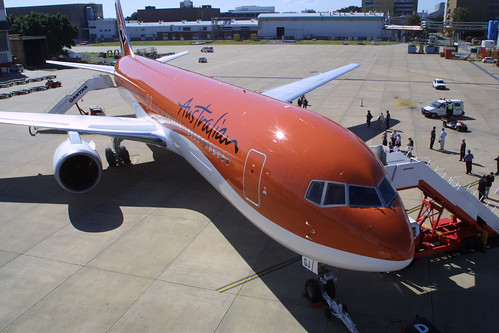
The airline was not a revival of the former domestic carrier in its original form. Rather, Qantas reused the historic name for a lower-cost international leisure subsidiary. Operations began on October 27, 2002, initially with four former Qantas Boeing 767-300ERs configured with 271 economy seats. Based mainly in Cairns, it served destinations including Japan, Hong Kong, Singapore and Taipei, later adding services from Sydney and Melbourne to Bali. (Qantas)
Australian Airlines occupied an unusual position: it was cheaper to operate than Qantas and offered only economy seating, but it was marketed as a full-service airline rather than a conventional no-frills carrier.
Early promise, followed by difficult conditions
The airline was initially profitable, according to Qantas, but its launch coincided with a turbulent period for Asian tourism. The Iraq War and the SARS outbreak sharply reduced international leisure travel during 2003. Australian Airlines recorded a loss in the June 2003 quarter after having been profitable until March. (Qantas)
It nevertheless continued operating and expanding for several more years. The decisive problem was not simply an immediate financial collapse, but that the airline no longer fitted Qantas’s emerging brand strategy.
Jetstar made it redundant
Jetstar began domestic operations in 2004 and proved capable of serving the price-sensitive leisure market with an even lower cost structure. Qantas subsequently decided that maintaining three passenger brands—Qantas, Jetstar and Australian Airlines—created unnecessary overlap.
On April 11, 2006, Qantas announced it would concentrate on two distinct brands:
Qantas for premium business and leisure passengers.
Jetstar for lower-fare and holiday markets.
Australian Airlines would therefore disappear from July 2006. Jetstar’s proposed long-haul network included Bali, Osaka, Bangkok, Phuket, Ho Chi Minh City and Honolulu, taking over much of the leisure-market role Australian Airlines had been created to perform. (Qantas Investors)
What happened to its aircraft and employees?

Australian Airlines ceased branded operations on June 30, 2006. Its five Boeing 767-300ERs were repainted in Qantas colours and converted from all-economy layouts to two-class Qantas configurations. (Qantas Investors)
Many Cairns-based aircraft and crew continued to operate international services, initially through a wet-lease arrangement under Qantas flight numbers, uniforms, and service standards. About 370 Australian Airlines positions were expected to remain in Cairns, although approximately 40 cabin-crew jobs were progressively removed. Some routes were retained as Qantas services, others were dropped, and Bali flying gradually shifted to Jetstar. (TravelMole)
Australian Airlines, therefore, did not fail in the manner of Ansett or later Bonza. It was absorbed and superseded: Qantas kept much of its capacity and workforce, while Jetstar International—launched in November 2006—became the group’s principal long-haul leisure carrier.


No comments:
Post a Comment